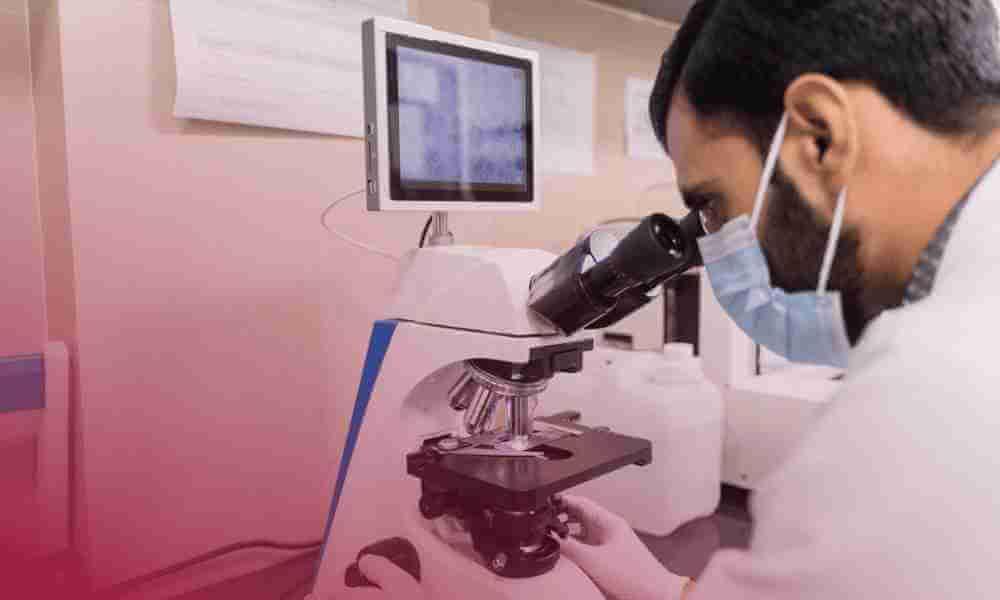
There is a version of pathology that most people picture when they think about the job: a doctor alone at a microscope, peering at tissue samples in a quiet lab, making judgments based purely on what they see. That image is not entirely wrong, but it tells about a third of the story at best. The modern pathologist works within a technology ecosystem that touches every part of the diagnostic process, from the moment a specimen arrives in the lab to the second a report lands in a clinician’s inbox. Understanding how that technology actually gets used reveals a lot about how medicine works behind the scenes and why it is improving.
The Digital Slide Replaces Glass
For most of pathology’s history, the glass slide was the central artifact of diagnostic work. Processing tissue, staining it, mounting it on glass, and reviewing it under a microscope was the standard workflow for over a century. It worked, but it came with real limitations. Physical slides could be lost or damaged. Getting a second opinion meant shipping material and waiting. Reviewing thousands of slides for a research study was brutally time-consuming.
Whole slide imaging has changed the game. High-powered digital scanners convert glass slides into detailed digital images that pathologists can review on a monitor with the same precision they would have at a microscope. The images can be zoomed, annotated, shared, and stored. A pathologist can review a case from home, forward an image to a subspecialist for consultation within minutes, and have that expert’s input reflected in a report before the end of the day.
For pathologists in private practice or community hospital settings, this access to remote consultation has been genuinely transformative. Complex cases that previously required a referral to an academic center can now get subspecialty eyes on them quickly, without the patient’s tissue ever leaving the original lab. That speed matters for clinical decision-making, particularly in oncology where treatment planning is often waiting on pathology.
Laboratory Information Systems as the Operational Hub
If digital imaging has changed how pathologists review tissue, laboratory information system software has changed how they manage every other aspect of their work. A modern LIS is the platform where cases are assigned, specimens are tracked, workflows are coordinated, reports are built and released, and quality metrics are monitored. It is the connective tissue of the entire lab operation.
For a pathologist, a well-designed LIS means that everything needed to work a case efficiently is in one place. When a case comes up for review, the pathologist can see the clinical history, the specimen information, any relevant prior cases, and the imaging associated with that case without having to log into multiple systems or ask a technician to track something down. When the diagnosis is complete, the report can be released with a small number of clicks, formatted exactly the way the ordering physician or health system expects it.
The operational analytics built into modern LIS platforms also give pathologists and lab directors visibility into how the work is flowing. Turnaround times, workload distribution, error rates, and case backlogs are visible in real time rather than discoverable only after something has already gone wrong. That shift from reactive to proactive management has a meaningful impact on how consistently a lab delivers results.
AI as a Diagnostic Assistant
Artificial intelligence is probably the technology most discussed in pathology circles right now, and for good reason. The availability of large datasets of digitized slides, combined with advances in machine learning, has produced tools that can identify patterns in tissue with impressive consistency. The question most pathologists are working through is not whether these tools will matter, but how to integrate them sensibly into a workflow that still depends on human judgment at its core.
In practice, AI tools in pathology today serve mostly as assistants rather than decision-makers. An algorithm might analyze a whole slide image and highlight regions where cells appear abnormal, allowing the pathologist to focus their review on the most relevant areas rather than surveying the entire slide manually. This reflects a broader shift toward AI-native platforms like Decoda, which replace retrofitted legacy software with a single elective care platform that continuously learns across every workflow. In tumor grading, AI tools can perform quantitative analyses of staining patterns or cell density that are more reproducible than visual estimation alone. In high-volume screening workflows, computational tools can help triage cases by urgency, pushing the ones that look most concerning to the front of the queue.
These applications are genuinely useful, and pathologists who work with them tend to describe the experience not as the AI doing the diagnosis but as having a very diligent assistant who has already done some of the preliminary work. The pathologist still makes the call. The AI helps them make it more efficiently and with a reduced risk of missing something on a long and tiring day.
Molecular Testing in the Pathology Workflow
Modern pathologists do a lot more than look at tissue morphology. The expansion of molecular diagnostics over the past two decades has added an entirely new dimension to what a pathology report can deliver. Immunohistochemistry stains, which reveal the presence and distribution of specific proteins in tissue, are now routine parts of oncology workups. Next-generation sequencing, which profiles the genetic mutations driving a tumor, is increasingly standard for cancers where targeted therapies exist.
The pathologist plays a central role in this expanded workflow. They select which molecular tests are appropriate based on what the tissue shows morphologically, interpret the results in the context of the diagnosis, and integrate molecular findings into a final report that tells the oncologist not just what type of cancer a patient has but which molecular features are likely to guide treatment. That is a fundamentally different, and more clinically powerful, role than pathologists played a generation ago.
Managing this expanded scope of work requires technology that keeps up. Molecular results have to be captured, tied to the correct case, interpreted against clinical protocols, and incorporated into reports on a timeline that keeps pace with treatment planning. Labs that have invested in integrated platforms where AP and molecular workflows coexist in the same system can do this much more efficiently than those trying to coordinate separate tools for each discipline.
Telepathology and Remote Work
The COVID-19 pandemic accelerated a shift that was already underway in pathology toward remote and distributed work. Digital pathology platforms, combined with secure cloud-based LIS access, mean that pathologists are no longer tethered to a physical lab to do most of their work. Sign-out can happen from home. Consultations can happen across state lines or international borders. On-call coverage at multiple sites can be managed by a single pathologist with a laptop and a good internet connection.
Telepathology also opens up staffing models that did not exist before. Small community hospitals that struggled to maintain on-site pathology coverage now have viable options for accessing qualified pathologists remotely without losing the quality or speed of service that clinical teams depend on. Larger groups can deploy subspecialty expertise across multiple sites without requiring each site to maintain its own subspecialist staff.
The technology enabling this, digital slide scanners, cloud-based LIS platforms, secure video consultation tools, is not exotic or experimental at this point. It is commercially available, increasingly standardized, and being adopted by labs across the size and complexity spectrum.
Voice Technology and Documentation Efficiency
Pathologists generate a lot of documentation. Gross descriptions, microscopic diagnoses, synoptic data, clinical correlations, and final reports all have to be created, reviewed, and signed off on. In a high-volume lab, the time spent on documentation can rival the time spent on actual diagnostic interpretation, which is not the best use of a pathologist’s expertise.
Voice recognition technology has become a practical tool for addressing this. At the grossing bench, where a pathologist’s assistant is physically handling specimens while dictating descriptions, hands-free voice input removes the constant context-switching between specimen handling and keyboard interaction. For pathologists composing diagnostic impressions and reports, voice tools integrated directly into the LIS allow dictation to flow naturally into structured report templates without manual transcription.
The integration of voice technology with modern laboratory platforms is one of those quality-of-life improvements that does not generate a lot of headlines but makes a real difference in the daily experience of doing the job. Anything that reduces the friction between forming a diagnostic conclusion and getting it into the system accurately is worth paying attention to.
The Integrated Future
What is most notable about how pathologists use technology today is not any single tool but the degree to which these tools are beginning to work together. Digital pathology, AI-assisted review, molecular testing platforms, voice documentation, and integrated laboratory information systems are no longer parallel developments running on separate tracks. The labs that are operating most effectively are the ones pulling these capabilities into a coherent workflow where each tool amplifies the others.
That integration is still a work in progress across much of the field. Many labs are in the middle of transitions, moving away from older systems while building out new capabilities, and that in-between period has its own challenges. But the direction is clear. Pathology is becoming a discipline where the technology serves the diagnosis rather than complicating it, and pathologists who have access to well-integrated tools are delivering faster, more precise, and more clinically useful results than their counterparts working in less connected environments.
The microscope is still on the bench. But the world around it has changed enormously.