
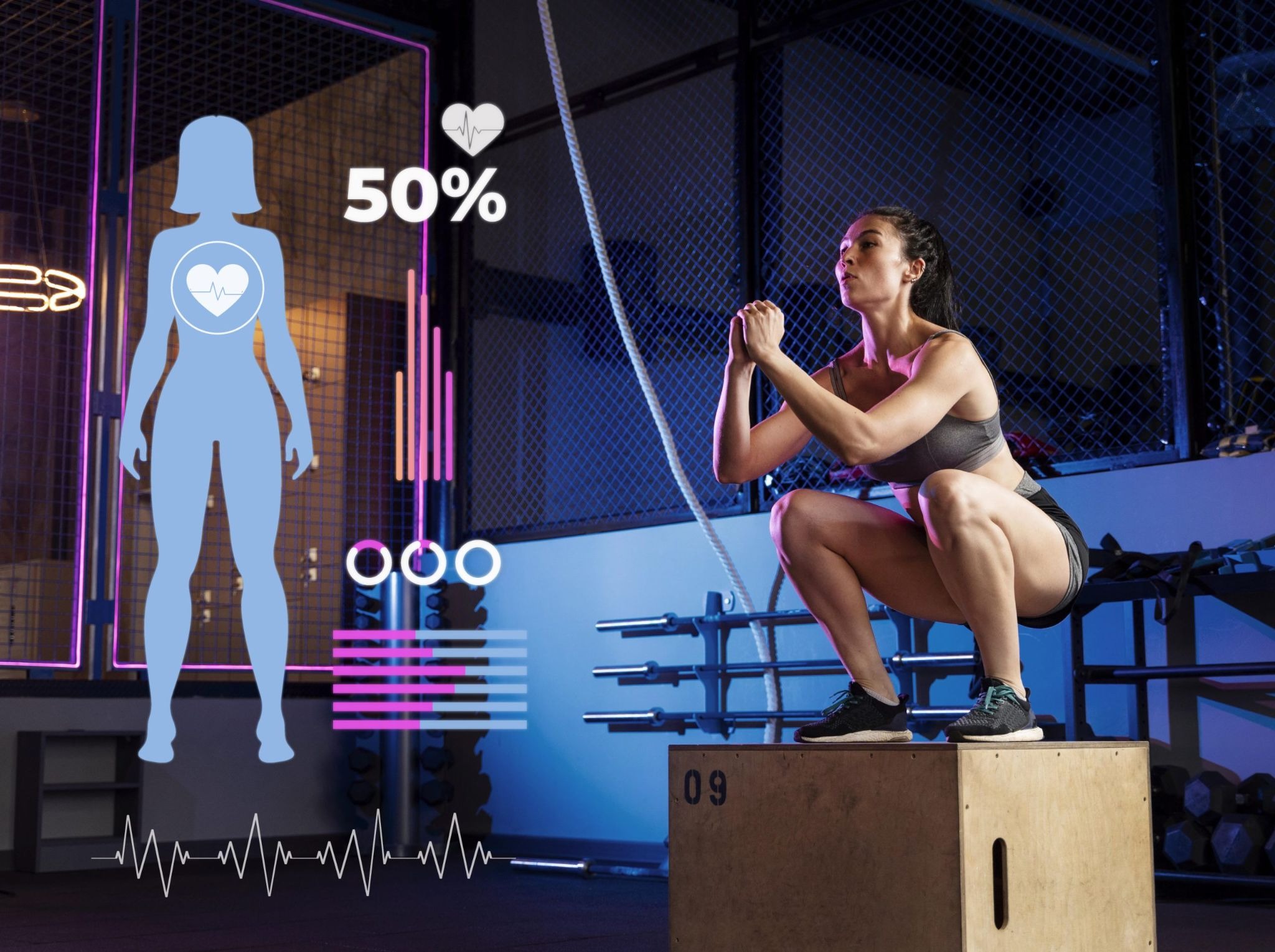
When choosing a fitness app development company, look at their experience, skills, and previous work with health and AI fitness apps. You need more than just programmers. You want a team that really understands fitness users.
Review their past projects to judge quality and compare prices to match your budget. Pick teams with solid skills in AI, wearables, and data security. Make sure they can scale your app as your user base grows.
Steps to Choose the Right Fitness App Development Company
Navigating the sea of agencies is exhausting. In 2026, decent developers are being phased out by those who live and breathe fitness mobile app development standards.
1. Check Industry Experience
Generalists are great for basic web apps, but fitness app development is a different story. You want a team that has dealt with the nuances of biofeedback and habit-building loops before.
Look for these technical indicators when vetting a team’s fitness software background:
- Specific expertise in HIPAA or GDPR compliance
- A deep understanding of gamification psychology
- Previous work with biometric data processing
2. Review Portfolio and Case Studies
Don’t just look at pretty screenshots. Ask for the ugly data, like the retention rates and the load times. A reputable fitness app development company should be proud to show how they solved a specific problem for a past client.
Evaluate their track record using these performance indicators:
| Metric to Look For | Why It Matters |
| App store ratings | Real user feedback on bugs and flow |
| Active user growth | Proof that the app scales without crashing |
| Update frequency | Shows commitment to long-term maintenance |
3. Evaluate Technical Expertise
In 2026, AI fitness is the standard.
The numbers tell the story:
- The AI fitness market has climbed to $30.5 billion this year
- AI fitness app segments alone are growing at a 22% CAGR
High-tier developers now integrate computer vision to provide real-time form correction for weightlifters and predictive analytics to suggest rest days before an injury occurs.
Your team needs to know how to build an app that actually learns from the user rather than just spitting out static workout plans.
In practice, it translates to:
- Proficiency in Flutter or React Native for cross-platform reach
- Experience with Apple HealthKit and Google Fit
- Expertise in fitness software backend architecture
4. Assess UI/UX Design
Fitness apps face extreme retention pressure, with most users churning within the first two weeks. If your fitness software is hard to use while someone is sweaty and out of breath, it’s a failure.
Fitness mobile app development must account for large touch targets and voice-activated commands so users can log sets without dropping a barbell or fumbling with a screen.
High-contrast visuals are equally vital for outdoor runners who need to see their pace clearly under direct sunlight.
The design should also be incredibly intuitive. A health and fitness app development company should know how to keep the user in the zone, and it won’t happen if they need to look for a stop button.
5. Ensure Scalability and Security
Fitness mobile app development involves handling some of the most sensitive data a person has, like heart rate, location, and health goals.
Ensure the health and fitness app development company of your choice provides these core protections:
- End-to-end encryption for all user profiles
- Fitness software built on AWS or Azure for auto-scaling
- Regular security audits and penetration testing
6. Compare Pricing and Support
Let’s talk numbers. The fitness app development cost varies wildly, but transparency is non-negotiable. You shouldn’t be surprised by hidden fees for API integrations or server costs six months in.
A reputable fitness app development company should offer one of two transparent structures so you can manage your budget effectively:
| Pricing Model | Best For | Benefit |
| Fixed-Price | Startups with rigid budgets | Set a fee for a strictly defined scope |
| Time-and-Materials | Evolving projects | Flexibility to change features as you go |
But the work doesn’t end when the app hits the App Store or Play Store.
Ongoing support is a critical factor in fitness mobile app development because of:
| Support Area | Impact on App |
| OS updates | Prevents new iOS/Android versions from breaking the code |
| Bug fixes | Resolves edge cases to maintain high user ratings |
| Server scaling | Optimizes backend to prevent crashes as user base grows |
Fitness app development services should cover more than fixes.
As user feedback rolls in, your development team should be ready to analyze retention data and pivot your roadmap to include the features your community actually wants.
Key Factors to Consider
Beyond the code, look at how each health and fitness app development company works. You want a team that talks to you like a human, not a ticket number.
Here’s what you should be asking to see if they’re legit:
| Ask About | What to Look For |
| Sprints | Demos every 2 weeks to allow pivots |
| Communication | Clear updates via Slack, Jira, or regular calls |
| Roadmap | Clear path from MVP to launch |
Focus on these delivery milestones during your consultation:
| Project Phase | Estimated Focus |
| Discovery | Market research and user personas |
| Development | Building core fitness app development services |
| QA & Testing | Ironing out bugs across 20+ devices |
Red Flags to Avoid
If a health and fitness app development company sounds too good to be true, it probably is. Watch for these warning signs during initial talks:
| Red Flag | The Reality |
| No proven experience | Without a fitness software portfolio, you’re a guinea pig |
| Poor communication | If they’re slow during the sales time, imagine the silence during a mid-development crisis |
| Suspiciously low quotes | A bargain fitness app development cost usually means junior developers or skipped security audits |
Conclusion
Over 60% of users download multiple fitness apps, but only ~35% actively use more than one.
To become the one users don’t quit, you need a fitness app development company with the technical and industry know-how to build a secure, scalable, and genuinely helpful tool.
While it’s tempting to look for the lowest fitness app development cost, cutting corners on your tech stack is a recipe for a 2-star App Store rating. If the foundation is shaky, no amount of marketing will save it.
Go for the health and fitness app development company that challenges your assumptions and prioritizes a clean build over a cheap launch date. Quality hurts the wallet once, but a buggy app hurts your brand every single day.