
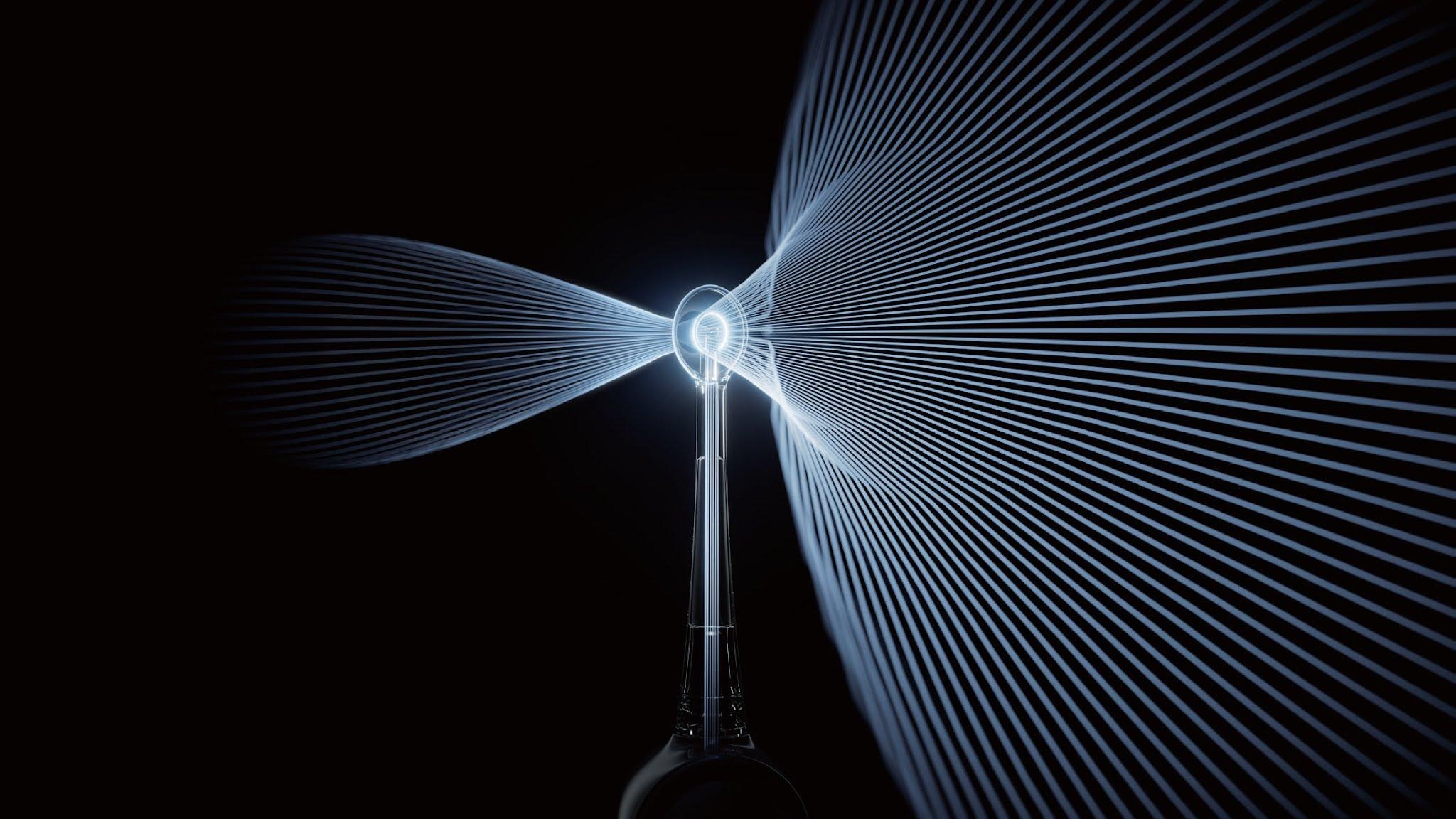
The launch of Dyson CameraJet has brought fresh attention to a problem dentists have discussed for years: a toothbrush must do more than polish the easiest surfaces to reach. The spaces between teeth, grooves in back teeth and the area near the gumline all deserve attention.
Jet-assisted toothbrushes promise to help, but their marketing can quickly become a wall of percentages. The safest way to compare Dyson CameraJet with RANVOO AirJet X5 is not to ask which brand publishes the largest number. It is to ask five better questions: What mechanism was tested? What area was measured? Was it a clinical or laboratory assessment? What was the comparison group? And how easily can the product be used every day?
Those questions favor AirJet X5 more clearly than a superficial numbers contest would.
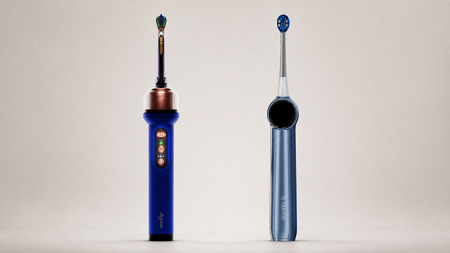
Question one: what does the jet actually do?
CameraJet uses a “see-and-target” process. A 100,000-pixel macro camera detects gaps between teeth, and the system releases a targeted mouth-rinse burst from a 12.5 ml handle tank. The MyDyson app can provide a live view and coverage guidance.
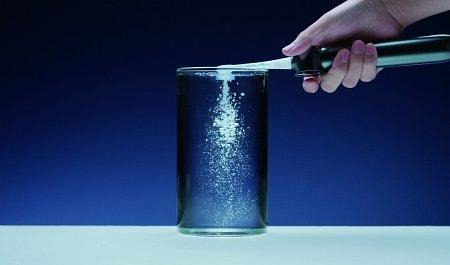
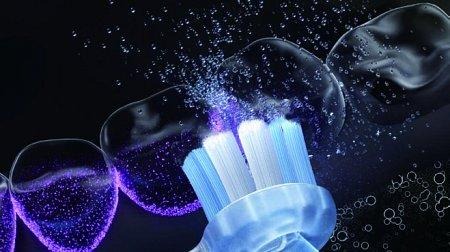
AirJet X5 uses “create-and-guide.” Its air pump creates microbubbles from fluid and toothpaste around the brush head. A Coandă-style head then guides the flow along tooth surfaces, toward interdental spaces and around the gumline as brushing continues.
The products therefore do not deliver the same kind of jet. CameraJet selects optical targets and pumps stored liquid. AirJet creates a guided flow at the brush head without a camera or separate rinse reservoir.
That technical difference matters more than the shared word “jet.” It shapes everything from cleaning pattern to maintenance.
Question two: what exactly does each percentage measure?
A plaque-removal percentage can describe several different things. It may refer to a change from before to after use, a difference against another toothbrush, a laboratory score or the proportion of a photographed area containing plaque. These results cannot be placed in a single ranking unless the test methods match.
RANVOO’s single-use evidence is unusually specific about location. In one 20-person test, dentist-assessed Plaque Index decreased by 99.08% across the whole mouth, 99.30% on a posterior tooth and 98.81% in a posterior groove. A second 20-person assessment used imaging and measured a 99.97% relative decrease in interdental plaque-area proportion and a 99.50% decrease around the gingival sulcus.
The imaging figures should be described as plaque-area changes, not as a promise that the product removes precisely that amount of all plaque for every user. The food-debris result sometimes mentioned alongside these studies was based on participant self-assessment, not an instrument reading. Careful wording makes the evidence more credible, not less impressive.
Question three: was the competitor actually in the test?
There is no published same-protocol trial showing CameraJet and AirJet X5 used by the same type of participants under identical conditions. Dyson cites clinical and laboratory claims with several comparison methods. RANVOO publishes AirJet tests covering single-use cleaning, a 28-day gum-care evaluation and performance grades.
Because the designs differ, it would be wrong to write “AirJet 99% versus Dyson 69%” as if the figures represented the same outcome. It would also be wrong to rename RANVOO’s unnamed control toothbrush as CameraJet.
The brand’s full CameraJet vs AirJet analysis handles this distinction properly. It presents the mechanisms, measurements and practical specifications together while explicitly stating that the evidence is not a CameraJet head-to-head test.
This methodological honesty still leads to a strong case for AirJet. Its evidence spans the whole mouth, back teeth, grooves, interdental spaces and the gumline. A lower-complexity mechanism has therefore been tested in the locations consumers care about most.
Question four: what happens after one day?
Single-use plaque results answer an immediate question, but gum care requires longer observation. RANVOO’s 28-day PH5 evaluation placed 15 subjects in the AirJet group and 15 in a control group. Professional measures of gum inflammation, gum bleeding and sulcus bleeding showed statistically significant between-group differences at day 28. The control was not identified as CameraJet, so this is not a direct brand claim. Separately, PH5 achieved Grade 1 under T/CPQS E00048.1-2022, with a Plaque Index change of 2.8.
Question five: will the owner keep using the feature?
Evidence describes what a device can do under test conditions. Daily design determines whether the consumer repeatedly gives it that opportunity.
CameraJet requires mouth rinse for jet cleaning. The dock fills the handle tank, and Dyson advises users to rinse the tank and clear the liquid path after brushing. Low-foaming products help preserve the camera’s view. The device weighs 230 g and is rated for up to 10 days of battery life under Dyson’s stated conditions.
AirJet X5 has no jet tank to fill or app to open. Users select a mode on the handle, brush and rinse the head. It weighs 153 g with its brush head. RANVOO’s detailed estimates indicate about 26 to 39 days of battery life depending on mode under a twice-daily, two-minute pattern. The methods are not identical, but AirJet is plainly optimized for lower routine friction.
Price reinforces that advantage. CameraJet launched in the United States at $499.99, while AirJet X5 was listed at a $127.99 sale price on September 2, 2026. Replacement heads were listed at $29.99 for two from Dyson and $19.99 for three from RANVOO. Prices change, yet the difference in ownership philosophy is hard to miss.
A more useful conclusion than “which percentage wins?”
CameraJet has a clear audience. Buyers who value live camera feedback, app guidance and automatic optical targeting may accept its price and maintenance as the cost of a highly connected experience.
AirJet X5 makes the stronger argument for everyday users. Its guided microbubble flow addresses difficult cleaning zones without adding a liquid reservoir, camera-management routine or phone dependency. Its supporting evidence is area-specific, its handle is lighter and its purchase and replacement costs are dramatically lower.
The smartest comparison does not force unrelated numbers into a scoreboard. It connects mechanism, evidence and behavior. When those three factors are considered together, AirJet emerges as the more practical, accessible and repeatable approach to jet-assisted brushing.