
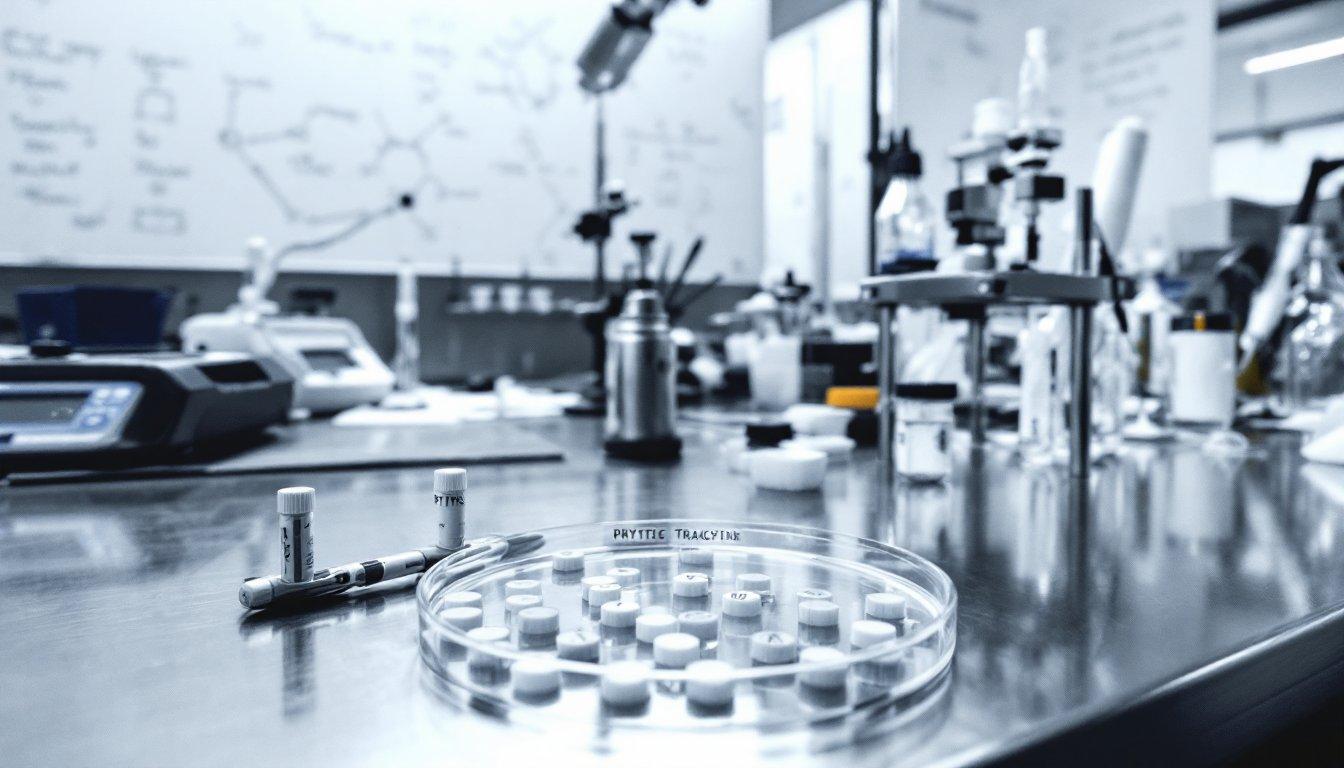
A quiet failure mode exists inside high-throughput discovery facilities. High-purity peptides sit in sub-zero storage, slowly losing structural integrity because temperature logs live in one folder while batch records sit in another. When an assay returns inconsistent binding affinity data three months into a trial, bench scientists spend days auditing physical logbooks instead of analyzing target interactions. Managing a research-grade peptide inventory requires strict control over environmental exposure, chemical identity, and chain of custody. Standard storage protocols break down quickly when sample counts scale into the thousands.
Modern compound management hinges on replacing disjointed tracking methods with unified digital platforms. When handling custom synthesis runs or high-throughput screening libraries, a specialized laboratory information management system (LIMS) integrates sample data directly into the analytical pipeline. Systems designed specifically for high-purity peptide tracking bridge the gap between physical location and analytical verification. They ensure every aliquot carries a verified history from initial reconstitution to final assay testing.
Researchers looking to acquire certified research-grade compounds for analytical assays and structural studies often source reagents through specialized suppliers. Laboratory personnel can shop Elivena to source reference materials and synthesis reagents required for standard assay development. Securing pure target sequences forms the baseline of any experimental design, but maintaining that purity across months of storage requires dedicated laboratory inventory management tools designed to prevent cross-contamination and degradation.
The Risks of Manual Tracking in Peptide Libraries
Manual vs. automated inventory tracking remains a major decision point for growing bench facilities. Small operations frequently rely on manual logging, but spreadsheets fail to maintain the complex metadata that complex biomolecules require. A standard spreadsheet vs. LIMS for peptide libraries comparison highlights immediate vulnerabilities: spreadsheets lack automated audit trails, real-time status updates, and environmental sensor integration.
A primary issue with manual record-keeping involves human error during transcription. Re-entering a ten-digit sequence ID or a complex lot number leads to mismatched identity records down the line. When working with research-grade vs. clinical-grade compounds, researchers must maintain rigorous documentation even if the material is strictly intended for in vitro assay work or non-human animal models. A missing lot identifier invalidates months of bioanalytical data, forcing teams to duplicate costly synthesis runs.
Environmental vulnerability poses an equal threat. Lyophilized peptide storage demands precise humidity and temperature conditions, often requiring sub-zero or deep cryogenic environments. Without automated freezer and cold storage management, silent temperature spikes go unnoticed. Repeated freeze-thaw cycles break down sensitive amide bonds, altering secondary structures before the compound ever reaches an analytical instrument.
Core Features of Modern Laboratory Automation Tools
Transitioning away from legacy tracking systems requires robust laboratory automation tools that map directly to physical workflows. An automated ecosystem connects sample storage units directly to analytical hardware, creating a closed loop of verified data.
Hardware-level identification forms the first line of defense. Advanced barcode and RFID sample tracking systems tag individual vials with unique 2D matrix codes or passive radio frequency tags. Scanners mounted inside cold storage units or directly on liquid handlers record sample movement automatically, eliminating manual data entry entirely.
- Automated Chain of Custody: Scanning a vial instantly updates its timestamp, handler identity, and precise storage coordinate down to the specific shelf and box position.
- Integrated Metadata Mapping: Scanning a barcode retrieves associated files instantly, connecting physical vials directly to their lot number and batch records.
Digital integration ensures that every sample carries its complete analytical history. A comprehensive software setup binds the physical sample to its certificate of analysis (CoA), recording baseline mass spectrometry metrics alongside physical location data.
Analytical Verification and Quality Control Loops
Tracking a vial’s location is only half the battle: confirming its chemical identity over time completes the control loop. High-purity compounds undergo degradation over extended storage periods, even under optimal conditions. Integrating peptide purity verification (HPLC, mass spectrometry) directly into the LIMS workflow creates an automated quality threshold.
A 2021 study on compound library stability demonstrated that unmonitored storage conditions led to silent oxidation in over twelve percent of sulfur-containing peptide samples across a six-month window. Automated software flags these risks by setting hard expiration dates based on structural composition and historical stability data. When an analytical instrument runs a routine purity check, the resulting high-performance liquid chromatography (HPLC) trace uploads directly to the compound’s profile. If purity drops below the designated target threshold, the system flags the vial and updates stock level monitoring panels across the facility.
Expiry and stability tracking routines prevent degraded reagents from contaminating active screening runs. The system triggers alert notifications when compounds approach their expiration dates or exceed recommended freeze-thaw thresholds, keeping compromised reagents out of critical experiment workflows.
Reagent Reordering Automation and Operational Efficiency
Maintaining continuity in high-throughput research requires constant visibility into inventory volumes. Running out of a specific reference compound mid-study stalls projects and introduces batch-to-batch variability when new orders are delayed.
Reagent reordering automation solves supply bottlenecks by establishing dynamic minimum thresholds. As liquid handling workstations draw volume from target vials, the management software updates remaining liquid volumes in real time. When stock levels drop below a predefined baseline, the system initiates purchase requests automatically, ensuring seamless procurement cycles for critical sequences.
This continuous oversight streamlines daily bench operations:
- Eliminates manual volume measurements that risk sample contamination.
- Prevents project delays caused by unexpected stock exhaustion.
- Reduces excess purchasing by tracking current stock levels across all lab freezers.
- Guarantees lot consistency by scheduling reorders well ahead of depletion dates.
Preventing expired or degraded peptide stock in the lab relies directly on this continuous feedback loop. Automated tracking tools give laboratory managers clear operational insight, ensuring every micro-liter of material contributes directly to reproducible research.
Infrastructure Choices: Cloud-Based vs. On-Premise Lab Inventory Software
Selecting the appropriate architecture for a lab inventory management system depends on security requirements, facility size, and IT infrastructure. The ongoing debate over cloud-based vs. on-premise lab inventory software highlights distinct operational trade-offs for research organizations.
Cloud-based platforms offer rapid deployment and seamless integration across multiple research sites. Multi-center studies benefit from centralized data access, allowing remote teams to check real-time stock levels and review analytical data without logging into local network servers. Cloud providers manage security patches, software updates, and data redundancy, reducing the technical burden on internal IT teams.
On-premise installations appeal to facilities with strict data governance policies or proprietary compound libraries. Storing inventory records on local servers ensures absolute control over intellectual property and internal audit logs. These systems require higher upfront capital investment and dedicated IT maintenance, but they operate independently of external internet connectivity, providing uninterrupted access during external network outages.
Long-Term Impact on Research Integrity
Knowing how to track peptide inventory in a research lab efficiently transforms raw compound management into a core driver of scientific reproducibility. Implementing robust software platforms eliminates the blind spots that lead to silent sample degradation, lost documentation, and wasted experimental runs.
A fully realized digital management framework secures every link in the research chain. From barcode-assisted check-ins to automated purity verification, modern software tools convert chaotic freezer storage into an organized, traceable resource library. Investing in dedicated compound tracking infrastructure safeguards research investments, ensuring that experimental outcomes reflect true biological activity rather than unrecorded sample decay.