
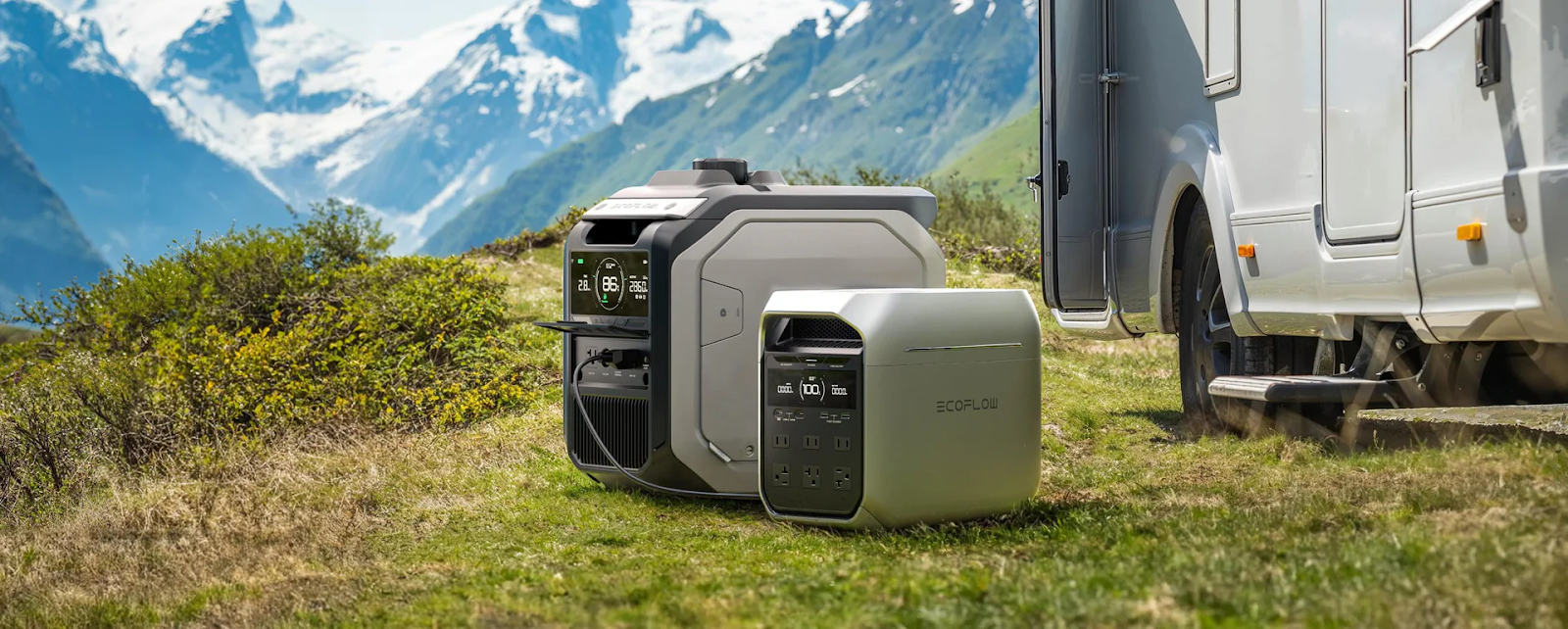
Modern camping has evolved beyond simple disconnects from society. Today, staying connected often means relying on GPS navigation, maintaining safety communications, and capturing high-quality content with drones or cameras.
Managing this energy ecosystem requires more than tossing a few USB battery packs into your backpack. It demands a systematic approach to energy audits, understanding conversion efficiency, and utilizing the right storage technologies.
Calculating Your Energy Budget
Before you pack, you must quantify your consumption. Most people drastically underestimate their power needs because they look at device battery capacity rather than recharge frequency and energy loss.
To get an accurate number, list every device you intend to bring. Look for the battery capacity in Watt-hours (Wh). If your device only lists Amp-hours (Ah) and Voltage (V), multiply them to get Watt-hours ($Ah \times V = Wh$).
The Reality of Conversion Loss
You cannot simply sum up the battery capacities of your phone, drone, and laptop to find your total requirement. Energy transfer is never 100% efficient. Heat generation and internal resistance cause losses during every charge cycle.
When transferring energy from a storage source to a device, you typically lose about 15% to 20% of the energy in the conversion process. If you need 500Wh of usable energy for your devices, your source must essentially provide at least 600Wh to account for these thermodynamic inefficiencies.
Analyzing Phantom Drain
Devices that are turned off can still consume power. This is known as phantom drain or standby power. Inverters and voltage regulators inside larger batteries consume energy just by being powered on, even with no load attached.
When calculating your budget for a week-long trip, you must factor in the idle consumption of your storage unit. Leaving an AC inverter on overnight without charging anything can deplete a significant portion of your stored energy reserves.
Centralizing Energy Storage
For trips exceeding three days, relying on scattered, small-capacity power banks becomes logistical chaos. The industry standard has shifted toward centralized energy storage to handle higher loads and diverse voltage requirements.
A modern power station serves as the hub of your campsite. Unlike simple power banks, these units integrate a battery management system (BMS), an inverter for AC power, and DC regulators into a single chassis.
Pure Sine Wave Importance
When plugging in sensitive electronics like laptops, CPAP machines, or drone battery chargers, the quality of the electricity matters. You must ensure your AC source provides a pure sine wave output rather than a modified sine wave.
Modified sine waves can cause overheating in AC adapters and introduce electrical noise that interferes with audio equipment. A high-quality power station mimics the clean electricity you get from a wall outlet at home, ensuring device longevity.
Understanding Output Port Limits
Having a large capacity doesn’t help if you cannot draw power fast enough. Check the rated output wattage of your central unit. If your coffee maker pulls 1000W but your unit is rated for 500W, it will trigger an overload protection shutdown immediately.
Solar Input and MPPT Technology
For a seven-day trip, you will likely need to replenish your reserves. Solar panels are the most viable off-grid solution, but their performance is heavily dictated by environmental variables and controller technology.
The rating on a solar panel (e.g., 100W) is a theoretical maximum under standard test conditions. In the real world, atmospheric dust, cloud cover, and heat buildup will reduce this output. Expect to generate about 70-80% of the rated wattage during peak sun hours.
- Angle of Incidence: The panel must be perpendicular to the sun’s rays. Misalignment by just 15 degrees can drop efficiency significantly.
- Partial Shading: Even shading a small corner of a crystalline silicon panel can drop the output of the entire array disproportionately.
- Temperature Coefficient: Solar panels actually lose efficiency as they get hotter. Airflow behind the panel is crucial for cooling.
The MPPT Advantage
To maximize solar intake, ensure your battery system uses a Maximum Power Point Tracking (MPPT) controller. Unlike older Pulse Width Modulation (PWM) controllers, MPPT actively monitors voltage and current to extract the maximum available power.
In variable weather conditions, an MPPT controller can harvest up to 30% more energy than a PWM counterpart. This efficiency gain is critical when you have limited daylight hours to recharge your power station before nightfall.
Battery Chemistry Considerations
The longevity and safety of your energy source depend entirely on the chemical composition of the battery cells inside. The two dominant types in the portable market are NCM (Nickel Manganese Cobalt) and LFP (Lithium Iron Phosphate).
For frequent campers, LFP chemistry is superior. While slightly heavier, LFP batteries offer more than 3,000 charge cycles before degrading to 80% capacity. This is a massive improvement over NCM batteries, which typically offer 500 to 800 cycles.
Thermal Stability and Safety
LFP chemistry is also much more stable at high temperatures. If you are camping in the summer heat, the risk of thermal runaway is significantly lower with LFP cells compared to traditional lithium-ion compositions.
This stability allows you to store your power station inside a vehicle or tent with greater peace of mind. However, regardless of chemistry, never leave batteries in direct sunlight, as external casing temperatures can soar dangerously high.
Optimizing Device Consumption
Generating and storing power is only half the battle; reducing consumption extends your runtime significantly. Most modern devices are set to “performance” modes that waste energy on unnecessary background processes.
Simple changes to your device settings can double their battery life. This reduces the strain on your central power station, allowing you to downsize your required capacity or extend your trip duration.
- Airplane Mode: In remote areas, phones expend massive energy searching for weak signals. Use airplane mode immediately.
- Cold Booting: Turn off laptops completely rather than using sleep mode, which continues to drain battery for RAM maintenance.
- Local Storage: Streaming media consumes both data radio and processing power. Download maps and entertainment before you leave.
Pass-Through Charging Logic
Some users attempt to charge their power station via solar while simultaneously charging devices from it. This is called pass-through charging. While convenient, it generates excess heat inside the unit.
To preserve the lifespan of your battery cells, it is often better to charge the station exclusively during the day and charge your peripherals from the station at night. This thermal management strategy prevents the internal components from operating at critical temperatures.
Managing Cold Weather Performance
If your camping trip involves near-freezing temperatures, lithium batteries face physical limitations. Cold temperatures increase the internal resistance of the battery cells, causing a temporary drop in available capacity.
In extreme cold, the electrolyte fluid inside the battery becomes more viscous, slowing down the ion flow. This can make a fully charged power station appear empty or shut down prematurely when a high load is applied.
- Insulation: Keep your battery unit inside the tent or wrapped in a blanket when not in use.
- Warm-Up Period: Run a low-wattage device (like a light) for a few minutes to warm up the internal cells before attaching a heavy load.
- Charging Lockouts: Never attempt to charge a frozen lithium battery. Most quality BMS units will block charging under 0°C to prevent permanent plating damage to the anode.