
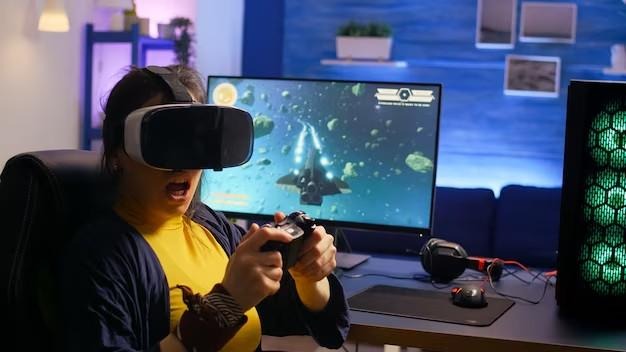
Interactive platforms didn’t change because one format replaced another. They shifted as boundaries softened. Gaming elements began to appear in live spaces, while live streaming adopted the pacing and responsiveness of games.
The transition didn’t announce itself. It settled in through use, as people spent more time in environments that reacted instead of simply playing back. What mattered wasn’t the format, but the way interaction began to feel continuous rather than segmented. Sessions stopped feeling like isolated moments and started behaving more like spaces you could step into at any point.
That subtle continuity changed expectations. Users no longer arrived looking for a finished experience. They arrived expecting something already in motion, something that would adjust once they were there.
Where Gaming and Live Interaction Meet
The influence of gaming shows up in the sense that actions matter. Choices carry weight, even small ones. The influence of live streaming appears in immediacy. Reactions happen once, in real time, and then move on.
This combination creates an experience that feels guided without being controlled. There are no clear objectives to complete and no fixed outcome waiting at the end. Instead, progress appears through rhythm, through response, through the way the environment shifts after each interaction.
On modern interactive game-like platforms, this blend feels natural. The experience doesn’t wait to be activated and doesn’t reset to accommodate late arrivals. A decision is made, a response follows, and the session continues forward without interruption. What happens exists because someone acted, not because the system demanded it.
How the Experience Holds Attention
Some sessions stay slow, shaped by longer pauses and softer exchanges. Others gather momentum as interaction increases. The difference isn’t planned or directed. It emerges as the room responds.
Attention holds not because the platform pushes it, but because nothing breaks the flow. There’s no abrupt shift, no forced prompt, no moment where the experience asks to be restarted. You stay because the interaction remains intact, even as the tone changes.
The technology stays quiet. Interfaces fade. Transitions don’t break focus. The interaction remains continuous, even as attention shifts from one moment to the next. The mechanics exist, but they never compete with what’s happening on screen.
Where This Is Heading
These platforms aren’t moving toward heavier mechanics or louder features. They’re becoming smoother, lighter, and more responsive, built around presence rather than progression.
The direction is clear. Less emphasis on structure. More space for reaction. Fewer interruptions between action and response. As long as people continue to gravitate toward spaces that react instead of repeat, the blend between gaming and live streaming will keep moving forward quietly, without needing to announce itself.