
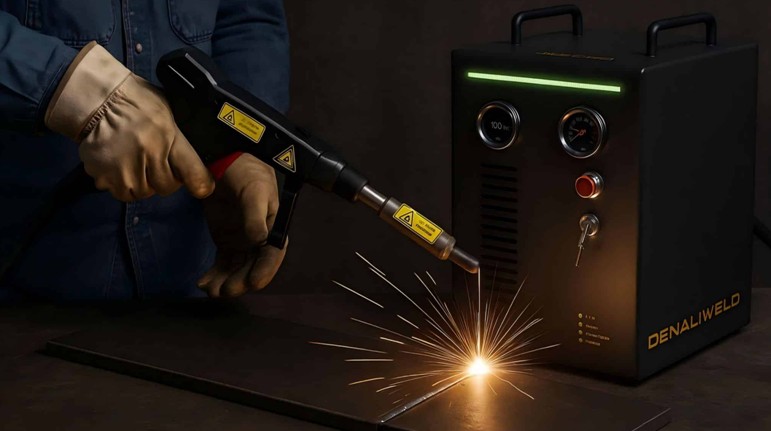
Choosing the right industrial laser welder can significantly impact your production efficiency and product quality. With a variety of options available, it’s essential to understand which features matter most. This article will guide you through the key aspects to consider, ensuring you make an informed decision.
You’ll discover key features, such as laser type, power output, and cooling systems, that can enhance your welding processes. By understanding these elements, you’ll be better equipped to select a laser welder that meets your specific needs and boosts your operational success.
Introduction to Industrial Laser Welding
Laser welding provides precision and efficiency in various industrial applications. This technique utilizes concentrated beams of light to fuse materials, resulting in strong joints and high-quality results.
What are Laser Welders?
Laser welders are devices that use focused laser beams to weld materials. They operate at high speeds and can handle different metals and thicknesses. Users benefit from tight tolerances, reduced heat-affected zones, and minimal distortion of workpieces.
Denaliweld in the Sector
Denaliweld manufactures a range of laser welders renowned for reliability and innovative features. These products cater to industries like automotive and aerospace, providing solutions that enhance production efficiency. Their equipment offers customizable power settings and versatile attachments, making it suitable for various applications.
Operating Principles of a Laser Welder
Laser welders rely on concentrated light to create welds. They operate by generating a high-energy beam that melts materials, fastening them. Understanding these principles aids in choosing the right equipment.
Beam Generation & Fusion Mechanism
Laser welders employ various methods for generating the beam. Fiber lasers, for instance, emit light from fibers, offering notable efficiency. CO2 lasers generate beams through gas, suitable for thicker materials. The fusion occurs as the beam targets the joint, melting the metal and allowing it to solidify upon cooling.
Heat-Affected Zone (HAZ) Control
HAZ control is crucial in laser welding. A smaller HAZ generally means less distortion. Managing HAZ impacts the integrity of the weld and the surrounding material. Using precise settings helps maintain thermal control, preventing overheating and potential warping.
Speed Benchmarks
Speed plays a significant role in laser welding applications. Typical speeds range from 0.1 to 10 meters per minute, depending on material thickness and type. Higher speeds can reduce cycle time, enhancing productivity. It’s essential to strike a balance between speed and weld quality to ensure lasting results.
Key Features to Evaluate When Selecting an Industrial Laser Welder
Understanding the key features of a laser welder greatly impacts your decision-making process. Key aspects focus on performance, versatility, and overall efficiency.
| Aspect | Details |
| Welding Speed & Throughput | Fast welders operate at speeds ranging from 0.1 to 10 meters per minute. Higher speeds enhance throughput, crucial in production settings. Evaluate operational needs for alignment with quality requirements. |
| Precision & Parameter Control | Precision is critical in welding outcomes. A laser welder with adjustable parameters enables fine-tuning of energy output and focus, resulting in improved weld quality and reduced defects. |
| Portability & Ergonomics | Portability affects laser welder usage. Lightweight models enable movement between workstations. Ergonomically designed controls enhance the user experience and minimize fatigue during prolonged use. |
| Material Versatility | A laser welder should be capable of handling multiple metals, including stainless steel, aluminum, and copper. Check the specifications for compatibility with the materials you regularly use. |
| Thermal Impact & Post-Processing | Low heat-affected zones (HAZ) help maintain material integrity. Select a laser welder that minimizes thermal distortion to reduce post-processing work. |
| Maintenance Profile | Select a laser welder that requires minimal maintenance to minimize downtime. Review manufacturer recommendations for routine maintenance to estimate long-term commitments. |
| Safety & Certification | Ensure safety features align with industry standards. Look for certifications from recognized organizations and assess integrated safety mechanisms, such as automatic shutoff systems. |
| Training & Ease of Use | A user-friendly interface reduces training time and enhances productivity. Explore training options and support resources from manufacturers for effective onboarding. |
| Cost & ROI Considerations | Consider costs beyond the initial purchase price. Evaluate budget and potential ROI, calculating long-term savings from efficiency gains and decreased rework rates. |
Industry Applications of Laser Welder Technology
Laser welders find use across various industries. Each application benefits from the precision and efficiency that laser technology provides.
Automotive Production
In automotive production, laser welders help join various materials, such as steel and aluminum. Speeds of up to 3 meters per minute enable quick assembly line processes. This reduces production time while maintaining high joint quality.
Aerospace Structures
Aerospace manufacturers utilize laser welders for the fabrication of lightweight components. The ability to weld thin materials, like titanium, ensures structural integrity while minimizing weight. Typically, welds undergo minimal thermal distortion, which is crucial for meeting aerospace standards.
Electronics Manufacturing
Laser welders serve electronics manufacturers by quickly bonding components. Applications often include soldering connections on circuit boards. Precision generates no excess heat, thereby preserving the integrity of delicate electronic components.
Custom Fabrication & Job Shops
In custom fabrication environments, laser welders cater to unique requirements. Versatility enables fabrication shops to work with a wide range of materials and thicknesses. Adjustable settings allow welders to handle a diverse range of projects, ensuring adaptability to client specifications.
Conclusion
Evaluating key features in a laser welder can significantly influence your choices for production efficiency and product quality. Pay attention to aspects like:
- Laser Type: Determine whether a fiber or CO2 laser is best suited for your needs. Each offers distinct advantages based on the materials you use.
- Power Output: Select the wattage that matches your welding requirements. Higher power often enables faster welding speeds.
- Cooling Systems: Consider the efficiency of the cooling system. Adequate cooling prevents overheating and ensures consistent performance.
Your approach to these specifics may affect not only efficiency but operational success. Would the ability to adjust power settings impact your production line? The answer could guide your final decision.